Showing posts with label Soccer. Show all posts

Saturday, July 7, 2012

Sports governance: Altering basic attitudes


Prince Ali Bin Al Hussein: changing attitudes

By James M. Dorsey

The road from a successful popular uprising to a more liberal, safe and just society in the Middle East and North Africa is proving to be a rocky journey into the uncertain if human rights, freedoms of expression and notions of good sports governance in post-revolt societies are anything to go by.

It’s easy to blame post-revolt governments representing vested interests or Islamists whose liberalism is at times little more than a facade for continued lack of respect for human rights, restrictions on freedom of expression and failure to clean out corrupt boards of sports bodies appointed to do an autocrat's bidding on

That would however be painting just a part of the picture. Fact of the matter is that the Arab public is proving to be as illiberal as its rulers are. As a result, post-revolt regimes are under little if any pressure to build truly liberal societies in which the rights of the weak are protected. For that to happen, popular notions of freedom will have to experience a revolution of their own.

To many Egyptians who participated in last year's demonstrations in Cairo's Tahrir Square that toppled President Hosni Mubarak, freedom increasingly means access to jobs and better quality of life rather than protection from arbitrary military rule or street mobs that rape whatever woman crosses their path. "I do not fear the Muslim Brotherhood. I do not fear the army. I fear my own people - their mentality. They will not defend my rights," a female Egyptian election observer recently told Doha Debates host Tim Sebastian in an .article in which he described how a young woman was sexually abused and stripped naked in Tahrir Square during celebrations of President Mohamed Morsi's election victory.

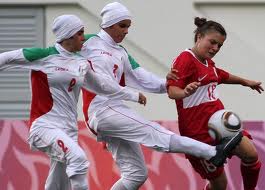
In a twist of irony, soccer, the very tool that Arab autocrats used to reinforce patriarchal and nationalist values to bolster their tarnished images is emerging as a key tool in one of the region's few real efforts to alter basic attitudes and mentality. Jordanian Prince Ali Bin Al Hussein, a half-brother of King Abdullah and at 32 the youngest ever serving world soccer body FIFA vice president, is employing soccer to promote women's rights and notions of good sports governance and challenge fundamental attitudes nurtured during decades of autocratic rule. The International Football Association Board (IFAB), soccer’s rule-making body this week lifted its ban on Muslim women wearing a headdress during FIFA competitions in favour of medically approved headscarves.

Supported by a group of ambitious professionals, Prince Ali has turned the 16-member West Asian Football Federation (WAFF) and the Jordanian Football Association (JFA) into models based on international standards of governance, transparency and accountability; democratic standards and bottom-up delegation of responsibilities. The JFA is the first Arab soccer body to have FIFA-approved professional rules and regulations.

Ironically, the fundamental motive underlying Jordanian reform stems from the region's urge for control. "Sports play a major role in a society with relative unemployment. It eases social tensions," said Mohamed Alayyan, JFA vice president and publisher of Jordan's largest daily newspaper.

The JFA focused its reforms on separating its administrative and judicial functions and weaning clubs away from the notion that politics dominated its administrative decisions. To do so, it borrowed heavily from the statutes  of FIFA and the Asian Football Confederation (AFC) with the creation of a disciplinary and an appeals committee as well as committees for marketing, human resources, competitions, player status and revenue generation. It further shifted responsibilities to the member associations by insisting that they too separate their executives from their administrative bodies.

The JFA has since taken the process a step further with plans for the creation of a league governing body designed to increase accountability and force clubs to come to grips with stadium management, and efforts to persuade clubs to transfer their assets to newly founded commercial entities. The body would be responsible for distributing 80 per cent of sponsorship income equitably among the competing clubs.

“Clubs need to feel that they have to work, have proper corporate governance and are accountable to the sponsor. The incentive for the clubs is that it opens the door to playing in the Champions League. We are telling the clubs that we are forced to impose these changes by FIFA and the AFC,” said Khalil Salem, a former investment banker-turned-JFA general manager.

The JFA’s next step is club licensing. The association recently appointed a licensing manager tasked with building the administrative infrastructure including a body of first instance and an appeals body.

The changes in the JFA are attracting attention across the Middle East, including from nations like Saudi Arabia that have rallied the wagons to fend off the waves of anti-government protests sweeping the region. That is however proving to be difficult when it comes to soccer. Fan pressure forced Prince Nawaf bin Feisal to resign earlier this year as head of the Saudi Football Association following Australia's defeat of the kingdom in a 2014 World Cup qualifier. Prince Nawaf was succeeded for the first time by  a commoner, Ahmed Eid Saad Alharbi, a lanky former Saudi soccer mid-fielder and proponent of women’s soccer, tasked with organising the body's first ever election.

His resignation broke the mould in a nation governed as an absolute monarchy and a region that sees control of soccer as a key tool in preventing the pitch from becoming a venue for anti-government protests, distracting attention from widespread grievances and manipulating national emotions. It also marked the first time that a member of the ruling elite saw association with a national team's failure as a risk to be avoided rather than one best dealt with by firing the coach or in extreme cases like Saddam Hussein's Iraq or Moammar Qaddafi's Libya brutally punishing players.

Alharbi hopes to incorporate new standards of governance in the statutes of his reorganised federation notwithstanding, Saudi Arabia is unlikely to emerge as a beacon of good governance. The ruling Al Saud family retains its grip on sports with Prince Nawaf staying on as head of the Saudi Olympic Committee  and the senior official responsible for youth welfare on which the SFA depends alongside television broadcast rights for funding. Major soccer clubs moreover continue to be the playground of princes who at times micro manage matches by phoning mid-game their team's coaches with instructions which players to replace.

In addition, sports remains a male prerogative in the arch conservative kingdom despite the nominal announcement on the eve of the 2012 London Olympics that Saudi Arabia would allow women to compete for the first time ever. The announcement was made immediately after the only woman with a chance to compete, equestrian Dalma Rushdi Malhas, had been disqualified by the International Equestrian Federation (FEI). Saudi women athletes have since expressed concern that they would be penalised for the pressure exerted on the kingdom by the International Olympic Committee and human rights groups to allow women to compete. Saudi Arabia underlined its lack of intention to develop women’s sports by last year engaging Spanish consultants to develop its first ever national sports plan -- for men only.

James M. Dorsey is a senior fellow at the S. Rajaratnam School of International Studies at Nanyang Technological University in Singapore, and author of the blog, The Turbulent World of Middle East Soccer.

Wednesday, December 21, 2011

Football Seeks Fans (JMD Quoted in Asia 360)


Football Seeks Fans
Chelsea star Didier Drogba surrounded by fans upon arrival in Kuala Lumpur this July as part of Chelsea’s preseason tour of Asia. Images: Mohd Rasfan/AFP
FIFA Club World Cup fails to get Asians excited about Asian football
The Manchester United bumper stickers, Real Madrid t-shirts and Liverpool hats that abound on the streets of Jakarta, Mumbai and Beijing illustrate how much Asia loves football. But it is a love that is seemingly reserved only for overseas teams.
Local leagues simply do not generate the excitement that the big foreign football leagues do. Given this, when two Asian clubs reached the semi-finals of the FIFA Club World Cup in Japan this week, most football fans in the region were more focused on Barcelona (Spain) and Santos (Brazil), the other two clubs left in the tournament.
The FIFA Club World Cup, held annually since 2005, includes representatives from each of FIFA’s six continental football confederations and one local club. The tournament’s global representation is intended to provide a more holistic platform for the world’s best football clubs to do battle than more established continental tournaments such as the Champions League in Europe or the Copa Libertadores in South America.
Asian Champions League winners Al-Sadd of Qatar reached the semi-finals of the Club World Cup with a 2-1 victory over African champions Esperance of Tunisia on December 11. Japan’s Kashiwa Reysol also made the semi-finals the same day, defeating Monterrey of Mexico 4-3 on penalties in front of a rowdy home crowd.
But for many fans, the real tournament did not start until Barcelona and Santos took to the pitch. The two clubs were granted automatic qualification into the semi-finals.
Some take exception to the imbalanced fervour of Asian football fans. A post on the blog, Stop EPL [English Premier League] Colonialism in Asia, earlier this year sums up the situation from a Singaporean point of view.
“If fans want to see improvement in the S-League [Singapore’s Professional Football League], they have to be the change themselves and select an S-League team to support,” the post said. “They can buy match tickets, club merchandise and help spread the word about their favourite football club.”
“And hopefully with this initiative, we may one day see Singapore move away from EPL colonialism and stand proudly for our own S-league.”
European leagues, of course, enjoy the luxury of having the world’s best players to help sell their product. But their popularity in Asia may also be simply due to better marketing.
“One part of it goes to the success of [European Leagues]. The other part of it is the outreach and the marketing of the clubs,” said James Dorsey, a veteran journalist who blogs at The Turbulent World of Middle East Soccer.
European clubs have successfully projected themselves as global brands, making ample use of the Asian market in the process. Most major European clubs take preseason tours of Asia, playing sold out exhibition matches against various national teams and clubs in Asia.
European leagues claim that these tours aid the growth of Asian football.
“We’re here and we’re adding interest to the game, adding interest to football generally,” Dan Johnson, the chief spokesperson for the Barclays Premier League, told The Jakarta Post in August during this year’s preseason tours.
“I think if you can leave a legacy there as well as generating interest in the game, that’ll develop the game here and we take that very seriously.”
Others, however, are quick to point out the flaws of Johnson’s argument.
“How can a Chelsea team playing a mishmash All-Star Thai team help the local game, especially when the Thai national team is playing Palestine in a crucial World Cup qualifier?” Anthony Sutton, a football journalist for The Jakarta Postwrote.
“It may seem unimportant to Chelsea, with its big money players and its chairman and his fancy yacht, but the qualifiers are important to Thailand. By having Chelsea play in town on the same weekend, it diluted the experience.”
Some Asian football leagues enjoy a decent amount of local support. But there is little doubt that many Asian teams could market themselves more effectively. This sentiment was echoed earlier this year by Stop EPL Colonialism in Asia.
“Corruption and plain incompetence are issues in Thailand, Indonesia and Malaysia whilst in Singapore there has almost been an unwillingness on the part of the FAS [Football Association of Singapore] to promote their domestic S-League.”
Kelvin Leong, the senior manager of corporate communications digital media for the FAS, has a different opinion.
“We believe that there is always a following for local football and we have our marketing initiatives that help to entice the fans to keep supporting local football,” Leong told Asia360 News.
Leong, however, declined to elaborate upon the marketing initiatives of the FAS.
Some Middle Eastern clubs are certainly starting to market themselves more effectively. According to Dorsey, Al Jazira, a small club based in the United Arab Emirates, quadrupled its ticket sales after taking active steps to reach out to fans. Other clubs such as Persepolis in Iran, have massive local fan bases, which can perhaps spark broader followings beyond borders.
“These clubs have the potential of becoming — maybe not global brands — but regional brands,” Dorsey said. “If you want to market that properly, you’d probably make some inroads.”
For Middle Eastern clubs though, making those inroads in large parts of Asia may be easier said than done due to the manner in which continents are defined by FIFA.
Japan and Korea have been the nexus of Asian football for decades. They are not only the two Asian nations to have advanced beyond the group stage of the World Cup on multiple occasions, but also had the distinction of co-hosting the 2002 World Cup, which saw Korea make the semi-finals. Indeed, when Al-Sadd defeated Korean club Jeonbuk Hyundai Motors 4-2 on penalties in the Asian Champions League Final on November 5, they became the first club outside Japan or Korea to win the title.
Though some Middle Eastern nations have made waves on the international scene, they are generally not viewed by football fans as “Asian”.
“The Middle East has never projected itself that way as such,” Dorsey told Asia360 News.
“They [Japanese fans at the Club World Cup] would probably not [cheer for Al-Sadd] because of the Asian perception that the Middle East is not Asia.”

Saturday, November 26, 2011

Play the Game – Developments in Sports in the Middle East


Play the Game – Developments in Sports in the Middle East

A less sinister issue: Iran and Turkey with different ideas about proper uniforms

In the past, issues related to sports in the Middle East have often tended to focus on the impact of religion and culture on the opportunities for athletes. In particular, the impediment for aspiring women athletes have been the subject of discussion, from outright prohibitions to the complications caused between the mismatch between traditional garb and the prescribed uniforms in different sports.
There have also been reasons to discuss political aspects, including strife or tensions between different Muslim countries or in their relations with Israel or with East Asia, the latter given the importance of continental Asian competitions. But over the past year, I have had reason to write articles about the impact on sports during the uprisings in Tunisia and Egypt, both of which are prominent handball countries, and about the outright persecution against athletes during the political protests in Bahrain.
It was therefore with great interest that I looked forward to the theme of Sports in the Middle East on the agenda of the ‘Play the Game’ conference. To some extent it was a letdown, as some key speakers cancelled, but this was made up for by the presence of an engaging and knowledge speaker in the person of James M. Dorsey, a Singapore-based scholar who also has a great blog. I can really recommend the blog (mideastsoccer.blogspot.com), where James combines his intimate knowledge of the region with a great passion for soccer and other sports. My search efforts on the web have been greatly facilitated by the discovery of his site, and some of the tidbits below have been provided by him.
Apropos Bahrain, James has followed through on the sad situation where, among others, a major soccer star by the name of Alaa Hubail remains jailed (and apparently tortured) for no clear reason, after his brother and other friends have been released. It is also intriguing that Bahrain was drawn against Iran in the preliminary rounds of the qualifying for the 2014 World Cup in soccer. After all, one of the stated fears on the part of the Bahraini government is of course the potential Iranian influence over the Shiite population in Bahrain. (Iran easily won the home game, and the game in Bahrain resulted in a tie; Iran is through to the next round, while most likely Bahrain will be eliminated).
In countries where the population is suppressed, one of the few types of groups that could emerge as strong, determined and well-organized are the fanatic supporters of the top soccer teams. This has been particularly obvious in Egypt, where these groups played a strong role in the initial uprising and now again when in recent days Tahrir square again has become the scene of massive protests and violence. This connection has repeatedly caused the military to undertake crackdowns against the fan clubs and to cancel matches that could be suspected to fuel the flames.
Qatar has of course been in focus after the FIFA decision to award the 2022 soccer World Cup to this country with an almost surreal plans to construct a huge number of air-conditioned stadiums to deal with the +50 C (122 F) temperatures. These plans now seem to have been dismissed as unsustainable by the architect charged with designing them. At the same time, major protests from large global trade unions, such as ITUC, have become a new concern. It is well-known that 90% of the work force in Qatar consists of imported workers who live and work under extremely difficult conditions. The charge from the ITUC uses labels such as ‘modern-day slavery’.
The current uprising in Syria also has elements of politics mixing with sports. It seems that successes in soccer is such a propaganda tool, that the cynical Syrians are now accused by their Lebanese neighbors of blatant cheating in international games at the junior level. In a desperate effort to have better results, apparently the Syrians did not hesitate to insert a large number of ineligible over-age players in their line-up. A somewhat more sinister story involves the family of their young national team goalkeeper, from the town of Homs, which has been a focal point for the uprising. The goalkeeper has emerged as protest leader, after his brother and several friends were killed by government troops.
Finally, Israel has often been found in the center of conflicts in sports, when its teams and athletes have received a less than friendly reception in other countries, or when certain Arab countries have forfeited games rather than having to play against Israel. But now it seems that internal politics is having an impact. A small number of soccer teams in Israel consist primarily of non-Jewish Israeli citizens, typically of Palestinian origin. Some of the players are good enough to make it to Israeli national teams at different levels. But now there has been legislation introduced in the parliament, under which this would not be allowed, unless these non-Jewish players declare allegiance to Israel as a Jewish state, and furthermore sing along in the Israeli national anthem which talks about a Jewish state and about ‘free people in the land of Zion’.
Yes, sports can indeed be (mis)used as an effective weapon in politics!

Tuesday, October 4, 2011

Sport fights back: A day of contrasts and defiance

The Military Academy Stadium in Cairo, Egypt looked as though it was on fire. Sizzling flares peeked through the smoke at intervals. A closer look at James M. Dorsey’s video presentation at the 2011 Play The Game Conference revealed thousands of sweaty young men bouncing up and down as they waved flags and flares.

04 October 2011
 

The first day of the conference is over and many interesting presentations were given. Photo by Tine Harden

Dorsey, a respected international freelance journalist, was kind enough to offer snippets of the renditions chanted by the football fans or, as they prefer, the White Knights’ Ultras.

“Revolution was a disaster for all of you!” roared the agitated crowd, as they glared down at their police attendants while stoking images of a flashpoint in Egyptian and Arabian history.

The mood was dark and menacing but also upbeat. The “Arab Spring” is as much a part of global lexicon today as was “Watergate”, nearly four decades ago. Dorsey, a senior fellow at Singapore’s Rajaratnam School of International Studies and Morocco’s Nanyang Technological University, pointed to football's role in the revolution that ignited the Middle East.

The contrast between Dorsey’s fiery football footage and the elderly Mario Goijman’s lonely tale of tackling volleyball’s status quo could not be more pronounced. Goijman, an Argentine businessman and engineer, looked like he might have already been shaving when the Watergate scandal rocked the White House in the early 1970s.

Goijman’s own presentation was titled “Volleygate”.

The former Argentina Volleyball Federation President did not encounter tear gas or police batons. But the betrayals and dishonesty that stalked the gentleman in a marathon fight for integrity from sport officials in the International Volleyball Federation was arguably even more moving. Goijman is engaged in a chess match of unconscionably high stakes that has left him on the brink of bankruptcy and with failing health.

“I have no more money to fight,” said Goijman. “My sons say, ‘father, do you regret your decision and would you do it again if the situation was the same’? And I say to them, ‘yes’.”

Anyone can fix
The headline acts of the 2011 Play The Game’s opening day were former World Anti-Doping Agency (WADA) president and International Olympic Committee (IOC) member Richard Pound and William Gaillard, the senior advisor to UEFA president Michel Platini. And both men offered some degree of insight based on their considerable knowledge of sport.

But it was, perhaps fittingly, the ‘outsiders’ who caused observers in Cologne to sit upright.

Add Canadian author Declan Hill to the latter list. His best-selling book, “The Fix”, remains as apt as ever with the recent uncovering of widespread match fixing in Germany, Turkey and Italy.

Hill, disconcertingly, suggesting that things were getting worse since the publication of his book in 2009 and match fixing was spreading beyond the realm of the underworld and now threatened irreparable damage to sport.

“Anyone can fix,” said Hill. “Anyone can fix. Any one can fix.”

So, Hill, Goijman and Dorsey—each in his own way—proved themselves to be the playmakers on Play The Game’s curtain raiser. But they were ably supported by a capable engine room.

The duo of Thomas Horky and Jorg-Uwe Nieland, a German professor and scientific researcher respectively, managed to make statistics perfectly palatable as they offered tidbits from the International Press Survey 2011. It was not altogether comfortable viewing for sport journalists, though, who were possibly exposed as sexist and lazy—according to your own interpretation, of course.

Finnish National Lottery director Andre Noel Chaker charmed with his presentation entitled “The Path Towards Greater Sports Integrity”, German researcher Werner Pitsch sparked debate on the merits of the “Randomized Response Technique” and Professor of International Relations and Global Governance, Hans Bruyninckx, skillfully waded through the murky waters of racism and sporting politics and even paused to wonder at FIFA’s growing taste for authoritarian states. Doris Pack, MEP and Chair of the European Parliament’s Committee on Culture and Education, also shared her own knowledge of sport.

The speakers themselves were well shepherded by the light, witty touches of the Play The Game team of directors Jens Sejer Andersen, Henrik H. Brandt and renowned German sport blogger and investigative journalist Jens Weinreich.

We don't forget

But Goijman and Dorsey, in particular, touched the deepest chords.


Goijman, who almost single-handedly toppled the helm of the International Volleyball Federation (FIVB) at great personal loss, mused over his desolate, gruelling contest with the sport’s former maximum leader, Ruben Acosta.

“At coffee breaks, my (FIVB) colleagues would say, ‘Mario, ask him why…’” he said. “And I would ask him. (But) no one else would raise his hand.”

Dorsey’s Ultras fought with different weapons in a dissimilar context. But their defiant streak may have resonated with Goijman.

“We don’t forget Tahir (Square), sons of bitches!” the White Knights bellowed at the Egyptian police.

Sport was in full cry.

How football fuelled the Arab Spring

Few people can be unaware that 2011 has been a momentous year for the many Arab nations. Successful uprisings in Tunisia, Libya and Egypt, and ongoing conflicts in Bahrain, Syria, Yemen and elsewhere have made headlines across the world. Much less known, however, is the role played by football supporters in these popular revolutions.

By Marcus Hoy

04 October 2011

James M. Dorsey spoke about the role played by football supporters in uprisings in Egypt and elsewhere. Photo by Tine Harden

The story of the pivotal role played by football supporters in the Arab Spring was related to Play the Game by James M. Dorsey, an award-winning US journalist and Middle East expert.

The Egyptian revolution in particular was fuelled by an extraordinary truce between street-hardened supporters of Cairo’s two largest clubs, Al Ahli and Zamalek, Dorsey said. During the so-called Arab Spring, he pointed out, one of the first actions of incumbent governments was to adjourn national football competitions in an attempt to isolate the radical elements congregating on the stands and terraces.

Under repressive regimes across the Middle East, Dorsey pointed out, the only two outlets for releasing the pent up anger of disenfranchised young men and women were the mosques and the football stadiums. And while Arabic football fans do not resort to terrorist acts, he added, they are often keen to embrace violence.

While mosques have been portrayed as a focus of fundamentalist Islam, soccer stadiums have been battle grounds for other issues such as women’s rights, national rights, ethnic rights, and religious rights. A large number of soccer fans are highly politicised, especially in the Egyptian capital, Cairo, where many describe themselves as anarchists, Dorsey explained.

Nowhere in the Middle East is the rivalry more intense than in Cairo where Zamalek, a former British colonial club, is a bitter rival with the populist Al Ahly. Supporters of both clubs count a large number of what Dorsey called “battle-hardened street fighters” among their number. These “ultras” fight each other and the security forces on a regular basis.

While popular demonstrations were taking place in Cairo’s Tahrir Square earlier this year, Dorsey said, the masses and the youth organizations of the Moslem brotherhood were joined by a third group – Cairo’s soccer fans, who had agreed an unprecedented truce in order to express their opposition to the autocrats in elite positions of political power – which to many mirrored the situation in Egyptian football.

Many grassroots supporters, Dorsey added, were unenthusiastic about last month’s appointment of former US national coach Bob Bradley as the head of the Egyptian National Team. This team is still seen by numerous Egyptian supporters as “Mubarak’s team”, he said, and many fans “couldn’t care less” about Bradley’s appointment.


Sunday, September 25, 2011

Embattled Yemeni leader turns to soccer to polish his tattered image


Yemeni president Saleh poses with national soccer team (Source: Reuters)

By James M. Dorsey

Embattled Yemeni President Ali Abdullah Saleh’s meeting Sunday with his country’s national youth soccer team highlights the importance of soccer as a battlefield in the struggle between Arab autocrats and pro-democracy activists.

Mr. Saleh congratulated team for their qualification for the 2011 Asian Football Confederation (AFC) Cup finals barely two days after returning to Yemen from three months of treatment in Saudi Arabia of severe wounds he suffered in an attack in June on his presidential compound by opposition forces.

The Yemeni leader took time out to bask in the success of the squad in a bid to shore up his tattered image in a soccer-crazy country that is teetering on the brink of civil war as a result of sixth months of mass anti-government protests demanding his resignation from 33 years in office. He did so as troops commanded by his son attacked protesters and clashed with rebel army units in battles that raised the death toll of eight days of violence to more than 100 despite Mr. Saleh’s declaration of a ceasefire.

Associating himself with one of the country’s greatest passions is part of Mr. Saleh’s survival strategy that involves as he announced in a televised speech on Sunday early presidential elections. Mr. Saleh’s proposal is unlikely to curry favor with his opponents who demand his immediate resignation, constitutional reform and only then elections. Mr. Saleh repeatedly agreed earlier this year to a Gulf-Cooperation Council (GCC) deal in which he would resign in exchange for immunity from prosecution only to back out at the last minute.

In associating himself with soccer, Mr. Saleh is following in the footsteps of other Middle Eastern and North African autocrats, including the ousted leaders of Egypt and Libya and Iranian president Mahmoud Ahmadinejad who saw soccer as a way to boost their tarnished images.

US embassy cables disclosed by Wikileaks detail the fuelling of nationalist emotions by Mr. Mubarak’s sons Gamal, who the president was believed to be grooming as his successor, and Alaa, to shore up the regime’s image after riots erupted in the wake of a crucial 2009 World Cup qualifier in which Algeria dashed Egypt’s hopes of playing in the tournament’s finals in South Africa. A November 25, 2009 cable said the only time Gamal displayed emotion during a presentation on healthcare was when he discussed the violence that took place in the Sudanese capital Khartoum where the match was played.

A 2009 US cable describes how Mr. Ahmadinejad sought with limited success to associate himself with Iran’s national team and soccer’s popularity. The Iranian president went as far as in 2006 lifting the ban on women watching soccer matches in Iranian stadia, but in a rare public disagreement was overruled by Supreme Leader Ali Khamenei.

The Iranian leader has also been hands-on in the management of the Iranian team. The cable reports that he pressured the Iranian football federation to lift its 2008 suspension of star Ali Karimi so that he could play in 2010 World Cup qualifiers, engineered the 2009 firing of Ali Daei as coach, ensured that Mr. Daei’s successor Mohamed Mayeli-Kohan lasted all of two weeks in the job and ultimately was succeeded by the president’s candidate, Afshin Ghotbi.

Mr. Ahmadinejad justified his interference by saying that “unfortunately, this sport has been afflicted with some very bad issues. I must intervene personally to push aside these destructive issues.”

Mr. Saleh heaped praise on the Yemeni youth team. “Your performance has been excellent. You have proved that the Yemeni sports are continuously developed and able to compete in the Arab, regional and international sports events" the president told them. He said that he had followed the team closely during his recovery in Saudi Arabia and that his government would fully support it.

Mr. Saleh’s meeting with the soccer players echoes rifts in society and the game that emerged during the revolts in Egypt, Tunisia and Libya where managers and players often stayed on the side lines of the battle for greater freedom or even expressed support for the embattled leader. In Egypt, militant fans unfurled a banner during one of the first matches after Mr. Mubarak’s demise that read: "We followed you everywhere but in the hard times we didn't find you."

Player and soccer manager attitudes towards the revolts in the Middle East and North Africa reflect a complex relationship of the ruled with the dictator that is evident across the region. It is an attitude that cannot be reduced to vested economic interest or privilege but constitutes an expression of the dictator’s success in getting those he rules to internalize his positioning as the nation’s father. It is that rupture of the internalization articulated in statements of protesters that they had broken the barrier of fear that constitutes the core of the region’s newly found people power.

The internalization of the dictator as a father figure means that players and managers often support protesters’ demands for an end to corruption, greater transparency and more freedom, but object to the perceived indignity to which they see their leader or father as being subjected to. It is an attitude that resembles that of a child who defends his father irrespective of whether his father is right or wrong.

Mr. Saleh’s focus on soccer highlights the struggle between autocrats and activists for control of the soccer pitch and the credibility that emanates from the one institution and venue that commands the kind of deep-seated passion evoked by religion in a conservative swath of land stretching from the Atlantic coast of Africa to the oil-rich sheikhdoms of the Gulf.

For militant soccer fans, who emerged as soccer increasingly became a political football, wresting control of the pitch from autocratic regimes is a battle against the yoke of autocratic rule, economic mismanagement and corruption. It also signifies the quest for dignity; for national, ethnic and sectarian identity and women’s rights.

Fans from Algeria to Iran have resisted the efforts by the region’s autocrats to politically control stadiums by repeatedly turning them into venues to express pent-up anger and frustration, assert national, ethnic and sectarian identity and demand women’s rights. “The battle is on the soccer pitch because there is no freedom and no political competition. Talking doesn’t change things. We fought for our rights in the stadium for four years. That prepared us for the day that the revolt against Mubarak erupted,” said Ahmad Fondu, a leader of militant, highly politicized, violence-prone soccer fans in Egypt.

James M. Dorsey is a senior fellow at Nanyang Technological University's S. Rajaratnam School of International Studies in Singapore and the author of the blog, The Turbulent World of Middle East Soccer.

Friday, September 16, 2011

JMD in NYT: What Kind of Job Is Bradley Walking Into?


September 16, 2011, 11:30 AM

What Kind of Job Is Bradley Walking Into?

If Bob Bradley is indeed headed to Egypt this weekend to sign on as the coach of its national team — not a done deal, according to at least one source close to Bradley — then what kind of a job is he walking into?
Egypt won the last three African Cup of Nations titles, but failed to qualify for next year’s tournament. It was closely aligned with the government of the former president Hosni Mubarak, a fact that doesn’t exactly count as a positive in Cairo these days. And when Egypt’s national league was suspended for much of the spring, many of the country’s most passionate fans — after coming together to help lead antigovernment protests — alternately waged open conflict with each other and the security forces.
In short, Bradley’s move is most definitely not the same as taking, say, the Vancouver Whitecaps job. So, wondering what he was thinking, and what he was in for, we asked James M. Dorsey, who writes comprehensively about soccer in the region on his blog, The Turbulent World of Middle East Soccer, a few questions about what Bradley can expect, and about some of the obstacles he’ll have to overcome to keep the Pharaohs, a longtime African power, from coming apart at the seams.

Soccer match sparks nationalist protests in northwest Iran


Nationalist fans demand unification with post-Soviet Azerbaijan

By James M. Dorsey

Massive nationalist and environmental protests erupted this week in the Iranian city of Tabriz during and after a soccer match between storied top league teams Esteghlal Tehran FC and the town’s Traktor Sazi FC, a flashpoint of Iranian Azerbaijan’s identity politics that is owned by state-run Iran Tractor Manufacturing Co. (ITMCO).

The protests demanding unification of the Iranian province of East Azerbaijan with the post-Soviet republic of Azerbaijan as well as Iranian government measures to prevent Lake Orumiyeh in the predominantly Azeri northwest of the country from drying up erupted as fans made their way to the stadium to watch the match.

Security forces were out in force following the arrest last month of scores of soccer fans and environmental activists protesting a decision by the Iranian parliament not to allocate funds for the channeling of water from the Araz River to raise the level of the salt lake that lies between the Iranian provinces of East and West Azerbaijan near the border with Turkey. Parliament suggested instead that Azeris living near the lake be relocated.

This week’s protest was the fourth time this year that anti-government sentiment spilled onto the soccer pitch, one of the few places that strength of numbers and moments of intense passion spark expressions of dissent. It was however the first in which Azeri nationalism fueled by perceived Iranian discrimination resurfaced.

“Wherever Tractor goes, fans of the opposing club chant insulting slogans. They imitate the sound of donkeys, because Azerbaijanis are historically derided as stupid and stubborn. I remember incidents going back to the time that I was a teenager,” said a long-standing observer of Iranian soccer.

In a failed bid to prevent protests, security forces barred many Traktor Sazi fans from entering the stadium to watch the match against Esteghlal, which the Azeri team won 3:2. Fans were body searched and then had their tickets confiscated. In response, thousands of fans started shouting “Azerbaijan is united" and ““Long live united Azerbaijan with its capital in Tabriz.” Scores were injured as security forces tried to break up the protest with force.

The protests, boosted by the Traktor Sazi defeat of Esteghlal, spilled out of the stadium into the city and the Sattar Khan cemetery. Cars honking their horns choked traffic as security forces arrested scores.


Iranian soccer pitches are battlefields for Iranian president Mahmoud Ahmadinejad, a soccer fan who sees the game as a way to polish his tarnished image, and fans who view it as a venue to express dissent.


A 2009 cable from the US embassy in Tehran disclosed by Wikileaks describes how Mr. Ahmadinejad has sought with limited success to associate himself with Iran’s national team in a bid to curry popular favor.

Mr. Ahmadinejad went as far as in 2006 trying to lift the ban on women watching soccer matches in Iranian stadiums, but in an early public disagreement was overruled by Supreme Leader Ali Khamenei.

The funeral in May of a famous Iranian soccer player in Tehran’s Azadi stadium turned into a mass protest against the government of Mr. Ahmadinejad.

Tens of thousands reportedly attended the ceremony for Nasser Hejazi, an internationally acclaimed defender and outspoken critic of Mr. Ahmadinejad.

In a rare occurrence, some 1,000 women were allowed to be present during the ceremony. Iran bans women from stadiums in accordance with its strict segregation of genders in public places.

Mourners chanted “Hejazi, you spoke in the name of the people” in a reference to Mr. Hejazi’s criticism of the Iranian president’s economic policies. Mr. Hejazi took Mr. Ahmadinejad in April to task for Iran’s gaping income differences and budgetary measures which hit the poorest the hardest.

The mourners also shouted "Goodbye Hejazi, today the brave are mourning" and "Mr Nasser, rise up, your people can't stand it anymore".

The Football Federation of the Islamic Republic of Iran (FFIRI) postponed in February league matches in Tehran in a bid to prevent celebrations of the 32nd anniversary of the Islamic revolution from turning into anti-government protests inspired by the anti-government protests in Tunisia and Egypt that toppled presidents Zine el Abedine Ben Ali and Hosni Mubarak.

James M. Dorsey is a senior fellow at Nanyang Technological University's S. Rajaratnam School of International Studies in Singapore and the author of the blog, The Turbulent World of Middle East Soccer.

Besiktas-Tel Aviv match reflects Turkish-Israeli reality


Pro-Palestinian Turks at Inonu Stadium (Source: AP Photo)
By James M. Dorsey
Istanbul's Fiyapi Inonu Stadium this week painted the sorry state of Turkish-Israeli relations as it hosted a politically laden Europa League soccer match between the city's Besiktas JK and Maccabi Tel Aviv.

A battalion of riot police deployed in the. 32,0000-seat stadium to protect a handful of lone Israeli Maccabi fans who had travelled to Turkey's commercial capital for the match despite the government's expulsion earlier this month of the Israeli ambassador and the suspension of all military cooperation.

Several hundred protesters gathered on Istanbul's central Taksim Square as the match got underway to protest Israeli policies towards the Palestinian, US support for Israel and Israel's refusal to apologize for last year's interception by the Israeli navy of a Gaza-bound Turkish aid ship in which 8 Turkish nationals and a Turkish-American were killed.

The protesters chanted: "Murder Israel, get out of Turkey" and "Destruction of Israel, Freedom for Palestine." A banner at the venue vowed that "Imperialism will be defeated; the Islamic revolt will win the day."

Besiktas' 5:1 victory over Maccabi similarly seemed an accurate reflection of the state of affairs as Turkey's star rises because of its support for the anti-government protests sweeping the region and the regime's that have emerged out of the ashes of this year's demise of autocratic leaders in Tunisia, Egypt and Libya as well as its firm stance towards Israel.

By the same token, Israel is increasingly on the defensive with its ties to Turkey, its closest ally in the Muslim world at an all-time low, last weekend's storming of its embassy in Cairo by militant Egyptian soccer fans and pro-democracy activists, expected anti-Israel manifestations in Jordan, alongside Egypt the only Arab country with a peace treaty with Israel and next week's expected United Nations vote on Palestinian statehood.

The fact that the match was played in Istanbul amid the mounting political tension rather than in a neutral was a further tell-tale sign of changing realities. Israel had sought to persuade European soccer body UEFA to move the game but that was thwarted by Turkey which said was guaranteeing the safety of Israeli players and fans.

Speaking in Tunis on the day of the Istanbul match, Turkish Prime MInister Recep Tayyip Erdogan stressed that the days in which Israel had a free reign in the eastern Mediterranean were over. Mr. Erdogan said he was deploying Turkish warships in the region so that Israel "would no longer be able to do what it wants."

The role of the warships will extend beyond escorting future aid ships seeking to run the Israeli blockade of Gaza to disrupting Israeli and Cypriot drilling for natural gas in the eastern Mediterranean. The Turkish foreign ministry warned Turkey's foreign ministry warned that it would sign a continental-shelf delimitation agreement with Turkish-backed Northern Cyprus if the Greeks Cypriots began developing off-shore natural gas fields on the basis of their maritime demarcation deal with Israel. In response, the Greek government said the Turkish threat could prove "dangerous" to the already tense eastern Mediterranean basin.

Thursday, September 15, 2011

Violence overshadows Ahly-Esperance African championship match


Fireworks during Esperance’s match against Mouloudia Alger (Source: Tunisia-live.net)

By James M. Dorsey

Two weeks of soccer violence in Egypt and Tunisia overshadow Friday’s African Championship League encounter in Cairo between six-time African champion Al Ahly SC and Esperance Sportive de Tunis.

Al Ahly chairman Hassan Hamdy, in a bid to preempt renewed confrontations, met this week with representatives of Ultras Ahlawy, the club’s militant, highly politicized, violence-prone fans, who last week clashed with security forces in Cairo stadium and last weekend played a key role in the storming of the Israeli embassy in the Egyptian capital.

Concern that violence could erupt during Al Ahly’s match against Esperance was fueled by incidents on Monday in Tunis in a game between Club Africain and Ivory Coast champions ASEC Mimosas. Mimosas said in a complaint to the Confederation of African Football (CAF) that Club Africain supporters had hurled smoke bombs and fireworks onto the pitch. It said the game had to be interrupted in the first half for 30 minutes because of clashes with security forces who used tear gas. Violence also disrupted a match between Esperance and Algeria’s Mouloudia Alger.

Militant soccer fans in Egypt and Tunisia played a key role in mass anti-government protests early this year that toppled Presidents Hosni Mubarak and Zine El Abedine Ben Ali. The fans have since expressed frustration and protested against the slow transition in their countries towards democratic elections.

Mr. Hassan held out a carrot for the militants by promising that he would try and get eight militants released who are still being held by police after last week’s clash in Cairo stadium. 
The authorities released seven ultras earlier this week. Court proceedings against the militants are expected to start on Monday.

In an interview with the BBC, Esperance’s Cameroonian forward Yannick N'Djeng appealed for calm ahead of Friday's key match, which will determine which of the two teams will advance to the semi-finals.

"I want this match to be fair play - football is not fighting," Mr. N’Djeng said.

Wednesday, September 14, 2011

2022 World Cup spotlights strains in Qatari society


By James M. Dorsey

A recent article in Cornell University’s student newspaper, The Cornell Daily Sun, questioning whether Sheikha Mozah Bint Nasser Al-Missned, the wife of the ruler of Qatar, should be a member of the Weill Cornell Medical College Board of Overseers after establishing a clinic that describes homosexuality as a “behavioural disorder” and seeks to treat people who are gay spotlights complex issues the conservative Gulf state is confronting as it prepares to host the 2022 World Cup.

The stir in both the United States and Qatar caused by the article also puts into sharp relief tensions between the ambitions of the Qatari ruler, Sheikh Hamad bin Khalifa Al Thani, and Qatar’s elite to position the energy-rich Gulf state as an enlightened and important international political and financial player and a global sports hub, and the aspirations of significant segments of its conservative population.

If any Arab state has so far remained untouched by the wave of anti-government protests sweeping the Middle East and North Africa it is Qatar whose tiny population has benefitted from a cradle to grave social safety net, the country’s energy wealth and the emir’s policies that have put Qatar on the map. To the degree that there is criticism of the emir’s policies, their likely impact on Qatari society and the adjustments Qatar is under pressure to make as a result of its successful bid to host the World Cup, they are expressed quietly in private conversations and diwaniyas where local men gather.

Much like in the United Arab Emirates, Qataris are reluctant to rock the boat in a country in which they constitute a majority and that is forced to tolerate a majority of expatriates to compensate for the local population’s lack of numbers. As a result, both Qatar and the UAE have not been hit by mass anti-government protests as occurred in Bahrain, threaten to erupt in Kuwait and earlier this year racked Oman. The region’s protest wave has already toppled the autocratic leaders of Tunisia, Egypt and Libya and is tearing Syria and Yemen apart.

Nevertheless, Qatar’s bid to be a global player is putting stressful demands on a society that is rooted in deep-seated conservative tribal and Islamic values. To host the World Cup, Qatar has already had to expand the areas during the tournament in which alcohol can be consumed from beyond the relatively few bars in luxury hotels.

Trade unions are demanding that the Gulf state prove that migrant workers building infrastructure for the tournament are not subject to inhuman conditions. The International Trade Union Confederation (ITUC), the world’s largest trade union, and Building Workers International (BWI) charged in a report earlier this year that the working and living conditions of mostly Asian migrant labour being used to build nine stadiums in 10 years are unsafe and unregulated.

“A huge migrant labour force, with very little rights, no access to any unions, very unsafe practices and inhuman living conditions will be literally putting their lives on the line to  deliver the 2022 World Cup,” said ITUC general secretary Sharan Burrow ITUC..
BWI secretary general Ambet Yuson charged that Qatar’s “ability to deliver the World Cup is totally dependent on severe exploitation of migrant labour, which we believe to be barely above forced labour conditions.”

David Roberts notes on The Gulf Blog that a majority of Qataris are concerned with the overhaul of the Qatari education system by Rand Corp. that involved changing curricula, the language of instruction and the lifting of gender segregation in classrooms in Education City, an education-focused free zone. Cornell is one of the foreign universities that has a campus in Education City.

Similarly, Sheikha Moza’s very public role and presence constitutes a divisive issue. To young women, the Sheikha serves as a role model, yet many Qataris describe it, according to Mr. Roberts, as “undesirable or problematic” in a conservative country like Qatar.

Many Qataris take issue with Sheikha Moza’s mandatory introduction of DNA tests before marriage in a society where marriage among cousins is customary.

The Cornell student newspaper article re-focuses attention on apprehnsions raised from the day Qatar won the right to host the 2022 World Cup last December about the status of gay rights. Qatar like most predominantly Muslim nations bans homosexuality and gay groups have raised concerns about the status of gay fans during the tournament.

The website of Sheika Moza’s says that Al Aween clinic specializes in the treatment of disorders such as addiction to alcohol, drug and Internet use, as well as deviant and unusual sexual behaviour. The website hosts a document that lists homosexuality as one of several “behavioural disorders and negative tendencies.”

To treat its patients, the clinic offers a variety of “therapeutic units” and counselling. The website includes samples of counselling provided to patients. For example, a woman seeking advice on her relationship with another woman was told to stop her “unhealthy sexual behaviour” and end communication with her partner.

To be sure, Qatar is but one of many countries in the region struggling to balance conservative, traditional values with the demands of a globalized world. The hosting of the World Cup, however, puts it more than any other society in the Gulf under the international magnifying glass and emphasizes differences in perceptions of the country’s ruler and the traditional, conservative instincts of his subjects.

Says Mr. Roberts: “I repeat what I said on the day that they won the prize (the World Cup): they don’t have a clue what they’ve let themselves in for.”

James M. Dorsey is a senior fellow at Nanyang Technological University's S. Rajaratnam School of International Studies in Singapore and the author of the blog, The Turbulent World of Middle East Soccer.

FIFA investigates Syrian soccer association


(Source: AFC)

By James M. Dorsey

World soccer body FIFA is taking a close look at the affairs of the Syrian Football Association (SFA) following the resignation of the group’s board and last month’s banning of the country’s national team from competing to qualify for the 2014 World Cup finals in Brazil.

The SFA board in resigning took responsibility for the banning of the Syrian national team for fielding an ineligible player in two World Cup qualifiers against Tajikistan. The Syrian Olympic Committee accepted the board’s resignation.

The boards of both the SFA and the Olympic Committee are largely populated by people appointed with the approval of embattled Syrian president Bashar al-Assad. Mr. Assad and his regime face mounting international condemnation and economic sanctions for the brutality of its failed crackdown on six-month old mass anti-government protests. Some 2,600 people have so far been killed in the crackdown.

The Olympic Committee accepted the SFA resignations after investigating SFA staff and players for allowing George Murad to play the matches against Tajikistan in violation of FIFA rules because he had been a member of Sweden Olympic team in 2003 and 2005. The investigation concluded that SFA staff was responsible for the FIFA violation that led to the banning of the Syrian team.

A FIFA spokesman said the world soccer body was monitoring events in Syria following the board’s resignation and the ban. FIFA is likely to be looking at whether a new SFA board is elected without political interference, which is hard if not impossible to achieve in a country that is wracked by civil strife and regime brutality in a bid to cling to power at whatever cost.

James M. Dorsey is a senior fellow at Nanyang Technological University's S. Rajaratnam School of International Studies in Singapore and the author of the blog, The Turbulent World of Middle East Soccer.